
5 Things I Learned From Anne Wojcicki
The 23 and Me founder on how your community shapes you, money can set you free, genetics is personal—and why she refused to walk away when everything fell apart.
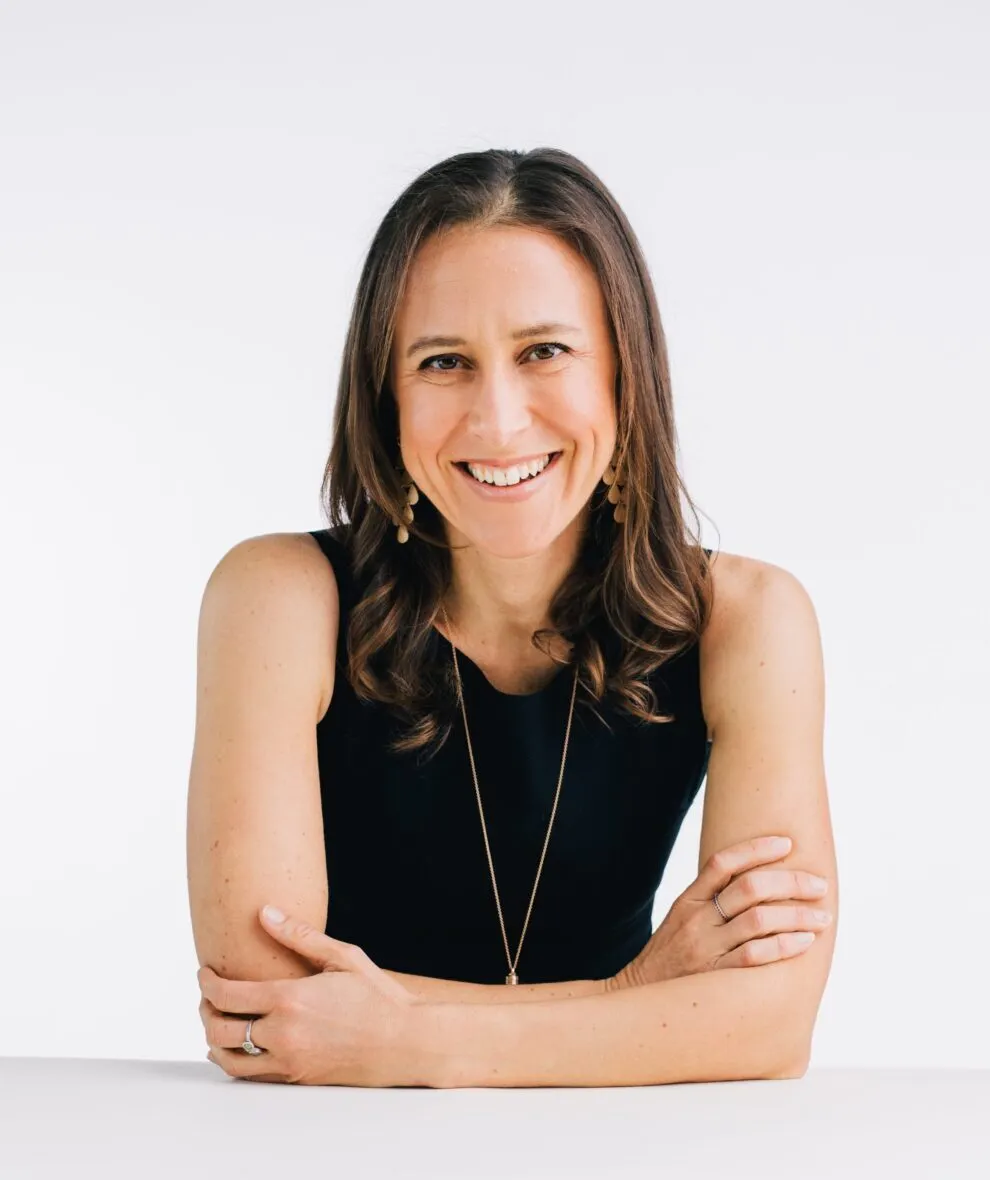
Anne Wojcicki has experienced just about every altitude entrepreneurship can offer.
She co-founded 23andMe when consumer genetics was barely a concept and helped turn spitting into a tube into something millions of people did to understand their ancestry and health. The company soared to a multibillion-dollar valuation. Then came falling demand, litigation, a security incident, a collapsing stock price, a board that quit, and ultimately bankruptcy.
At the same time, Anne was enduring devastating losses in her own family. Her father died. Her nephew died. And in 2024, her sister Susan Wojcicki, the longtime CEO of YouTube, died of lung cancer.
When Anne joined Pattie Sellers and me on LIFT, she didn’t sound like someone in mourning. She sounded like someone building something. She fought her way back into control of the company she built, which is now a nonprofit–the 23andMe Research Institute. And she’s still chasing the mission that got her into this in the first place: helping people understand and benefit from the human genome.
Here are five things I learned from Anne Wojcicki.
1.Your environment may matter more than you think.
People love to ask Anne what was going on in the Wojcicki household.
Anne built 23andMe. Susan helped build Google and later ran YouTube. Their sister Janet became a professor at UCSF. Their father chaired Stanford’s physics department, and their mother was a beloved teacher.
So I asked: What happened around that dinner table to produce three daughters like that?
Anne’s answer surprised me. They were completely normal kids. They talked about hair. One sister loved lip gloss. Susan apparently got into some trouble stealing street signs.
What was unusual wasn’t some secret parenting formula. It was the community surrounding them.
They grew up in Stanford faculty housing. Everywhere Anne looked, there were people obsessed with something—physics, mathematics, cardiac surgery, art history, journalism. Her father, the physicist, loved to talk about neutrinos (which are subatomic particles). Her mother loved journalism.
“The overarching theme was that everyone loved what they did,” Anne told us.
We spend so much time telling people—especially young people—to “find your passion.” Nobody tells them to go stand next to people who already have one.
Enthusiasm is contagious. So is ambition.
2.Financial freedom isn’t necessarily about having more. It can be about needing less.
I loved this part of the conversation.
Anne said her parents taught their daughters not only how to save money, but how not to spend it.
Her family didn’t aspire to wealth. Possessions, in fact, were seen as something that could bog you down.
“You’re liberated when you are financially free,” she said.
It meant she wasn’t terrified to walk out of a job. She could chase something she cared about instead of protecting a lifestyle.
I’ve always thought of financial independence as accumulating enough. But what if it was about actually needing less?
3.When everything falls apart, mission outlasts motivation.
There were moments during 23andMe’s collapse when people close to Anne told her she could walk away.
The company in litigation and under a congressional microscope. Her board quit. In the middle of it, her father died. Then her nephew. Then Susan.
Anne described it as “a really, really dark time.”
Friends texted her to say: You can walk away. It’s ok to quit.
Her response was the opposite.
“Why would I give up this opportunity to do something extraordinary?” she remembered thinking. “I understand it’s really hard today, but I don’t want to give up on my dream.”
She didn’t keep going because she felt strong every morning. She kept going because the thing she set out to do still mattered.
Motivation asks whether you feel like continuing. Mission asks whether the reason you started still exists.
4.Your DNA isn’t destiny. It’s information you can use.
Naturally, I wanted to know what she’d learned about her own DNA.
Quite a lot.
She found a genetic risk factor for breast cancer, information she says changed how she thinks about drinking alcohol. She’s tracked markers for conditions that run in her family. She used carrier screening when she was pregnant. And she is just as interested in diseases for which she doesn’t appear to have risk for.
Her larger point: Genetics doesn’t necessarily give you an answer. It gives you another clue. And sometimes, that information can change what you do.
Information about your body isn’t a verdict. It’s something you can act on.
Sometimes the most interesting people aren’t the ones who get sick. They’re the ones who should have—and don’t.
I’d never thought about disease this way before.
Buried within 23andMe’s enormous genetic dataset are people researchers call “resistors” or “escapers”: people whose genetics suggest they should develop a particular disease, but who don’t.
Why didn’t they?
Maybe another gene is protecting them. Figure out what it is, and maybe you can give that protection to everyone else.
She pointed to people genetically resistant to HIV and to a rare variant that keeps LDL cholesterol extremely low – people whose biology is pointing researchers toward treatments.
“Each and every one of us is a spectacular unique genetic experiment,” she said.
Medicine spends enormous energy studying what’s wrong with people. Maybe there’s just as much hiding in the people for whom, against the odds, turned out fine.
For Susan
There was one more thing.
Susan Wojcicki was 54, active, a runner and a nonsmoker when she was diagnosed with late-stage lung cancer. Anne remembers Susan’s disbelief: Lung cancer simply wasn’t something she thought she was at risk for.
The experience has now become part of Anne’s mission, too. Susan’s family launched the Susan Wojcicki Foundation to focus on understanding, preventing and detecting lung cancer, particularly among never-smoking women.
Anne started our conversation talking about growing up among people who were consumed by the things they cared about. Her dad had neutrinos. Her mom had journalism.
Anne has the human genome.
And after everything, she’s still at it.
LIFT with Pattie Sellers and Anne Marie Chaker airs live Thursdays at noon ET on SiriusXM Stars, and is available wherever you get your podcasts every Friday.


read other articles
-
What We Learned From Billie Jean King and Ilana Kloss
In an exclusive interview about partnership, power, and why strength is never a solo act.
• Jan 9, 2026 -
Winning is Not The Point Anymore
Now in my 50's, I returned to the bodybuilding stage after years of false starts. I didn't bring home a plastic trophy. Instead, I came home understanding why I still compete.
• Jul 28, 2026 -

The Art of Not Caring (When It Matters Most)
Alysa Liu’s gold-medal skate wasn’t indifference. It was something rarer: the ability to want deeply without letting the outcome own you.
• Feb 20, 2026